GREENEVA Promotes Stronger Climate Action Coordination through CONNECT Implementation in Central Java
24 August 2026 | By. Greeneva
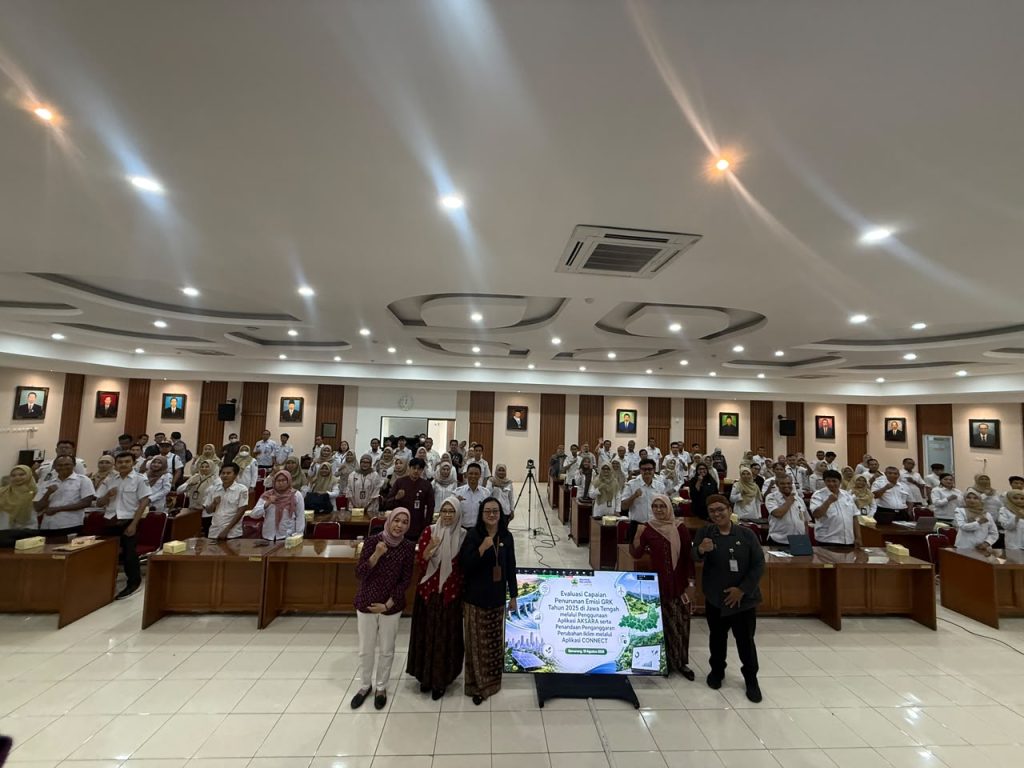
Climate change requires not only targets and commitments, but also well-directed planning and financing. Integrating development planning, budgeting, and climate action is essential to ensure that government commitments can be translated into measurable programs and activities whose implementation can be effectively monitored.
One instrument supporting this process is Climate Budget Tagging (CBT), a mechanism for identifying and tracking activities and budget allocations related to climate change mitigation and adaptation efforts. Through CBT, the government can gain a clearer picture of budgetary support for the climate agenda while strengthening transparency and accountability in its management.
As climate action continues to evolve, the need for greater integration of data and processes has also become increasingly important. Information related to climate action, development planning, budgeting, and reporting needs to be utilized in a more integrated manner to ensure that decision-making does not take place in isolation.
CONNECT: Linking Climate Finance with Climate Action
To support this need, the Ministry of Finance has developed CONNECT (Collaboration for New Environmental and Economic Transformation) as an initiative to promote digital and collaborative transformation in climate finance. CONNECT supports several key aspects of climate finance management, including data integration, Climate Budget Tagging, automation, and collaboration. Through this approach, the identification and management of information related to climate-related budgets can be carried out in a more integrated manner while strengthening fiscal responses to climate change.
The implementation of CONNECT is also important at the regional level. Various programs contributing to climate change mitigation and adaptation are implemented at both provincial and district/city levels. Therefore, cross-sectoral and cross-government coordination is needed to ensure that Climate Budget Tagging can be implemented in alignment with regional development planning. Beyond financing, connectivity with climate action reporting systems is also an important part of strengthening the climate action ecosystem. CONNECT is also being explored for integration with AKSARA (Aplikasi Perencanaan dan Pemantauan Rencana Aksi Nasional Rendah Karbon) to strengthen the link between climate finance information and low-carbon development action reporting.
Therefore, strengthening systems and coordination is not solely about budgeting. It is also about ensuring that data, planning, budgeting, implementation, and reporting are connected to support the achievement of low-carbon development and climate action targets.
CONNECT Implementation Coordination in Central Java
As part of efforts to strengthen the implementation of CONNECT at the regional level, a coordination meeting on CONNECT implementation and Climate Budget Tagging was held in Central Java on Wednesday, 19 August 2026. The meeting brought together Provincial Government Agencies (OPDs), Bappeda, and District/City Environmental Agencies, alongside Bappenas–LCDI and the Ministry of Finance. The forum provided a space for stakeholders to build a shared understanding of Climate Budget Tagging implementation and strengthen the alignment between the climate agenda, regional development planning, and budgeting.
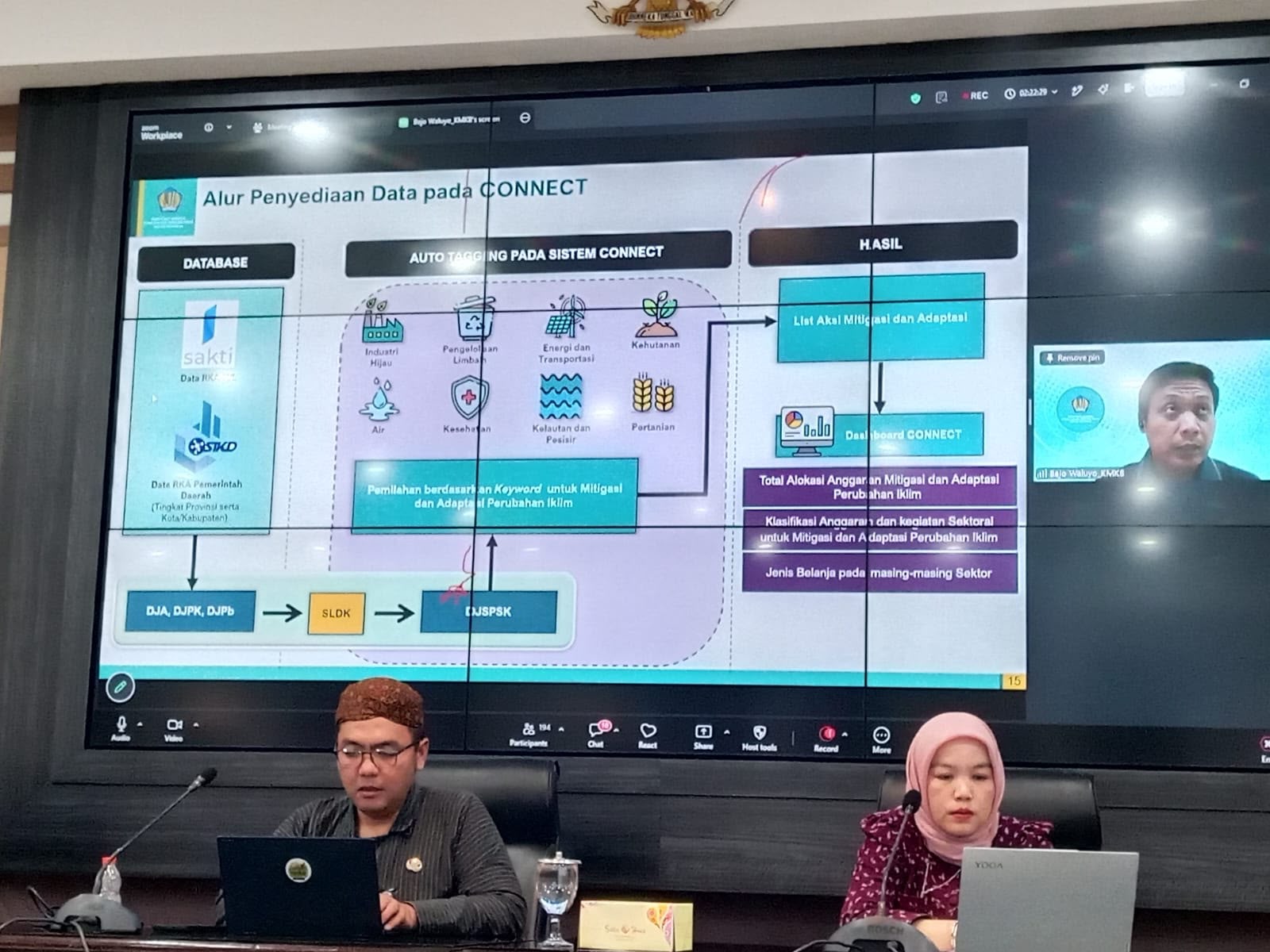
Such coordination is important as climate action involves multiple sectors and government institutions. Synergy among stakeholders is needed to ensure that information on programs, targets, and financing support can be managed more effectively and contribute to better decision-making at the regional level. During the meeting, GREENEVA was entrusted to serve as the moderator, facilitating discussions and the exchange of perspectives among stakeholders on the implementation of CONNECT and Climate Budget Tagging at the regional level. This role reflects GREENEVA’s involvement in supporting forums that bring together government institutions and relevant stakeholders around the low-carbon development and climate action agenda.
This involvement is aligned with GREENEVA’s experience and areas of focus in Greenhouse Gas (GHG) inventory, Low Carbon Development (PRK), AKSARA through training and technical assistance, and carbon management. This experience provides a relevant context for GREENEVA’s involvement in discussions connecting climate data, development planning, financing, and reporting. Through various training, technical assistance, and engagements in environmental and climate change initiatives, GREENEVA continues to support capacity building and stakeholder collaboration. For GREENEVA, strengthening climate action requires an integrated approach in which different components of development work together to deliver more targeted and effective action.
The CONNECT implementation coordination forum in Central Java represents one of the spaces for strengthening this collaboration. It is not only about identifying and tagging budgets as climate-related expenditures, but also about how the resulting information can support more climate-responsive planning, data-driven decision-making, and climate action that can be monitored and accounted for. Ultimately, strengthening climate action requires connectivity from upstream to downstream.
From data, planning, and budgets to action—everything needs to connect