Regional Contributions to Low-Carbon Development
16 May 2026 | By. Greeneva
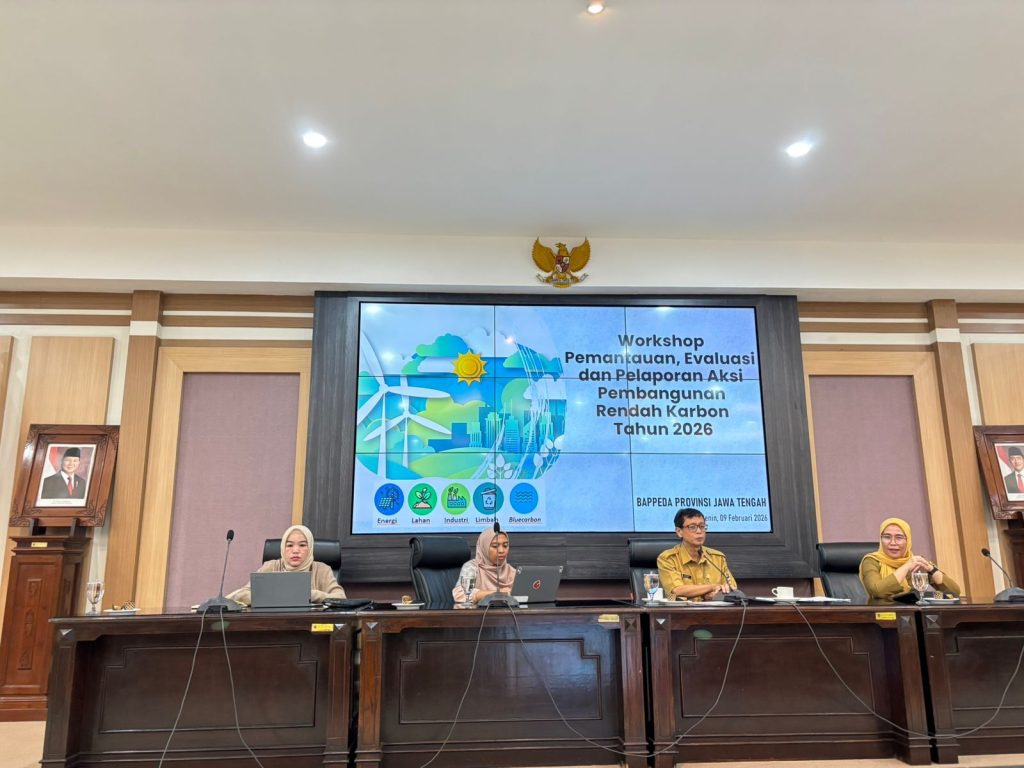
Monitoring and evaluation (M&E) is a key component in ensuring that low-carbon development programs are implemented effectively and in line with emission reduction targets. A strong monitoring system enables local governments to measure program achievements, assess the effectiveness of interventions, and support data-driven decision-making.
As part of these efforts, GREENEVA supports the implementation of low-carbon development at the regional level through technical assistance and training on the use of the AKSARA platform (Planning and Monitoring Application for Low-Carbon Development Actions) for local governments in Central Java Province. This initiative aims to strengthen the capacity of regional government agencies to conduct monitoring and evaluation in a more structured, transparent, and data-driven manner.
Based on monitoring and evaluation results from the AKSARA platform, Central Java Province has cumulatively achieved a greenhouse gas emission reduction of 38.81 million tons of CO₂ equivalent (CO₂e) up to 2025, representing 41.53% of its regional emission reduction target. These emission reductions originate from various sectors, including energy, waste, land use, coastal and marine areas, transportation, and industry. Among these sectors, forestry represents the largest contributor, with emission reductions reaching 23.16 million tons of CO₂e.
In terms of abatement cost analysis, agricultural carbon stock enhancement activities are identified as the most cost-efficient intervention, with a cost of IDR 1,302.88 per ton of CO₂e reduced. This finding highlights the importance of data-driven approaches in helping local governments prioritize mitigation actions that are both effective and cost-efficient.
Funding for emission reduction activities in Central Java Province comes from multiple sources, including the State Budget (APBN), Provincial and District/City Regional Budgets (APBD), Regional-Owned Enterprises (BUMD), the private sector, international grants, and external loans. Among these sources, the Provincial APBD represents the largest contribution, amounting to IDR 27.34 trillion. This achievement reflects the strong commitment of the regional government to supporting the sustained implementation of climate change mitigation actions.
Looking ahead, there remains significant potential to further strengthen the involvement of the private sector and business actors in accelerating emission reduction targets at the regional level. Through its experience in strengthening monitoring systems, managing emissions data, and supporting the implementation of low-carbon development, GREENEVA remains committed to assisting governments and stakeholders in advancing more sustainable, inclusive, and low-carbon development in Indonesia.