Central Java Faces the Impacts of Climate Change
14 May 2026 | By. Greeneva
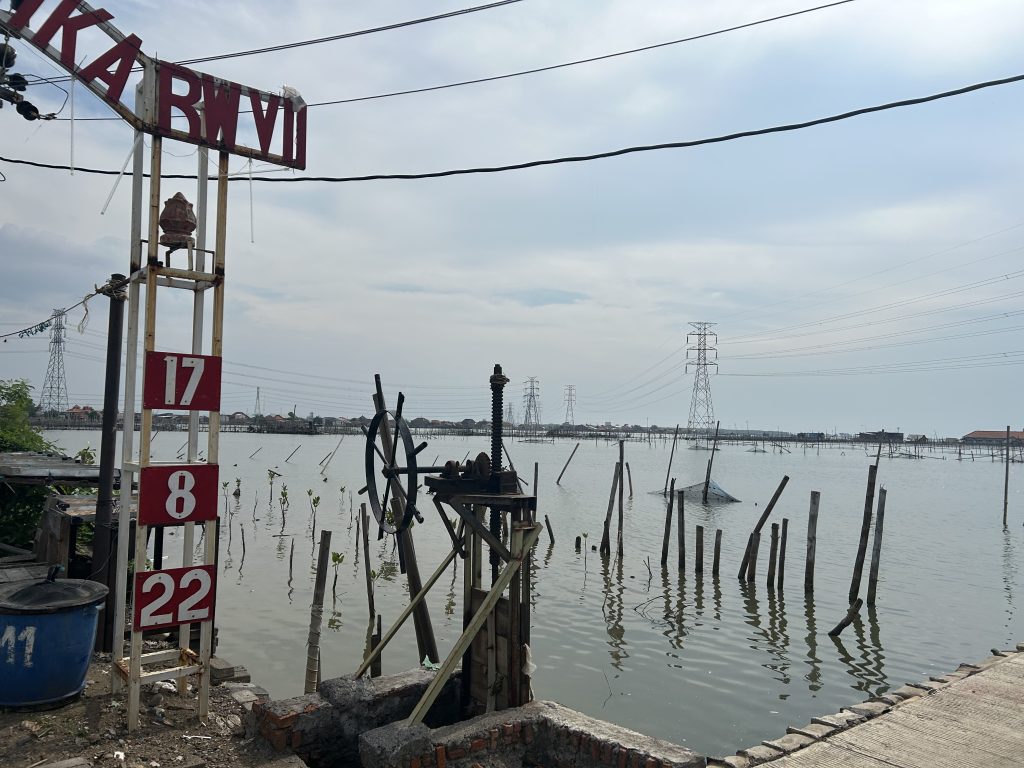
Java Province. A study conducted by the Ministry of National Development Planning (Bappenas) within the framework of low-carbon development and climate resilience highlights that climate change could lead to substantial economic losses if not addressed systematically and in a timely manner. In Central Java, the coastal and marine sector is projected to be among the most vulnerable, with estimated losses reaching approximately IDR 77.61 trillion over the 2020–2024 period, followed by the agriculture, health, and water resources sectors. These findings underscore the importance of integrating climate considerations into regional development planning.
As part of efforts to strengthen regional resilience, GREENEVA, in collaboration with the Provincial Government of Central Java and with support from KEMITRAAN (Partnership for Governance Reform), developed the Regional Action Plan for Climate Change Adaptation (RAD-API). The document was prepared through a comprehensive assessment that includes climate projection analysis, identification of climate hazards, vulnerability assessment, and climate risk mapping down to the sub-district level.
Climate projection analysis indicates a continuing upward trend in air temperature across Central Java in the future. Based on historical data from the Meteorology, Climatology, and Geophysics Agency (BMKG) and climate scenario projections, the average temperature is expected to increase by around 0.02°C per year under the moderate emission scenario (RCP4.5) and approximately 0.04°C per year under the high emission scenario (RCP8.5). A more pronounced increase is projected in maximum temperatures, which could rise by up to 3°C under RCP4.5 and exceed 5°C under RCP8.5 by the end of the century. In addition, rainfall analysis shows a declining trend in annual precipitation of around 8.9 mm per year under RCP4.5 and 14.5 mm per year under RCP8.5, potentially increasing the likelihood of drought in various areas of Central Java.
Based on consultations with regional agencies and stakeholders, the study identifies five key sectors most affected by climate change: coastal areas, water resources, agriculture and food security, public health, and disaster risk management. Data from the Central Java Provincial Marine and Fisheries Agency indicate that tidal flooding has affected 83 sub-districts along the coast, inundating more than 15,000 hectares of aquaculture ponds. In the water resources sector, the Provincial Public Works, Water Resources, and Spatial Planning Agency reports that approximately 35,400 hectares of irrigation areas are located in drought-prone zones. Meanwhile, the Provincial Agriculture and Plantation Agency notes that around 241,682 hectares of agricultural land are exposed to drought risk, while other areas are increasingly vulnerable to flooding, potentially affecting food production.
Climate change impacts are also evident in the health and disaster sectors. Data from the Central Java Provincial Health Agency recorded more than 19,155 dengue fever cases between 2019 and 2021, which are widely associated in environmental health studies with changes in rainfall patterns and rising temperatures. Meanwhile, the Regional Disaster Management Agency (BPBD) reports that hydrometeorological disasters—such as floods, landslides, and strong winds—remain the most dominant disaster types in the province.
To assess regional vulnerability, the study integrates Exposure and Sensitivity Indicators (ESI/IKS) and Adaptive Capacity Indicators (ACI/IKA). The results show that approximately 77% of sub-districts in Central Java fall into the moderate vulnerability category. This indicates that while adaptive capacity exists in many areas, sensitivity to climate impacts remains relatively high, highlighting the need for strengthened local adaptation measures.
Overall, the findings of this study serve as a foundation for the formulation of climate change adaptation strategies in Central Java through the RAD-API. The document is expected to guide local governments in systematically integrating climate adaptation into regional development planning, ensuring that development efforts not only drive economic growth but also enhance resilience to future climate risks.